

Oil majors use algorithmic “Risk Scoring” to filter vendors before humans read proposals. Learn why Gmail addresses and Facebook pages trigger automatic “High Risk” classification.
1. The Mechanism: It’s Not Snobbery, It’s Math
When a Local Content company loses a bid to a foreign competitor, the common complaint is “bias.” The reality is often much colder: Vendor Risk Management (VRM).
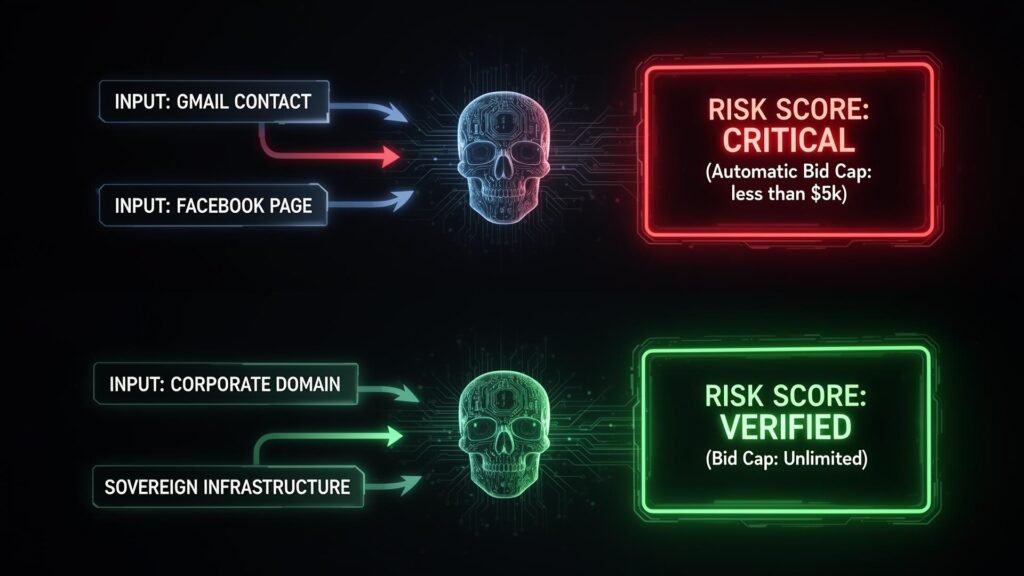
Tier-1 operators (ExxonMobil, Hess, SBM Offshore) do not just read your proposal; they run your company profile through a Risk Algorithm. This system assigns a numerical “Trust Score” to your company before a human ever reads your price.
- The Goal: To determine if your company will still exist in 12 months.
- The Logic: If your digital footprint is “Disposable,” your Risk Score goes up.
2. The “Disposable Identity” Signal (The Gmail Problem)
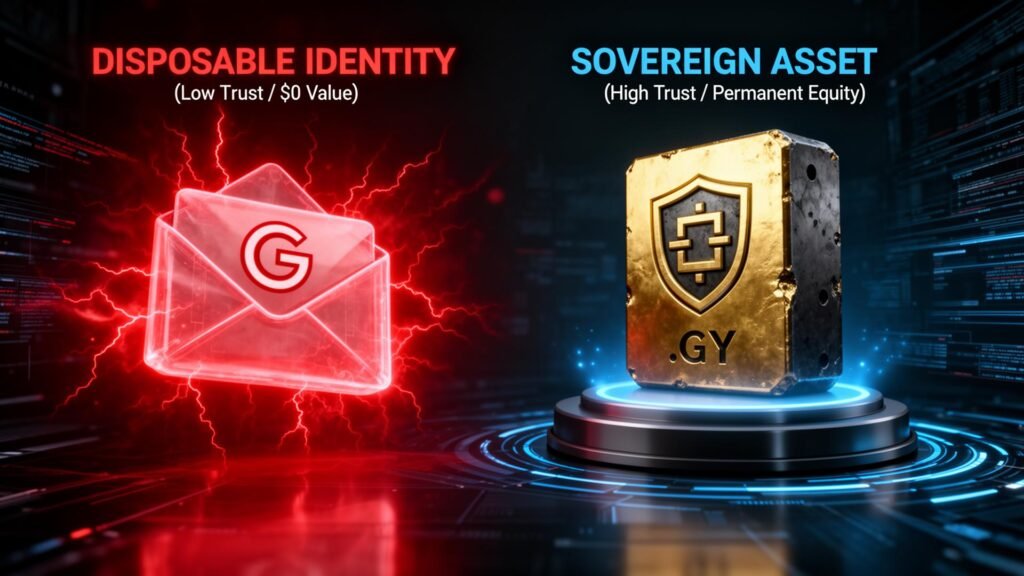
Why is @gmail.com or @yahoo.com an automatic red flag? It is not about “looking professional.” It is about Asset Permanence. This principle is enforced across all IOC vendor portals, including Exxon’s Cybersecurity Checklist.
The Explainer
A Gmail address takes 30 seconds to create and $0 to maintain. It is a “Disposable Identity.” A fly-by-night contractor can create guyana-logistics@gmail.com today and delete it tomorrow after taking a deposit.
The Calculation
To a Risk Algorithm, a free email domain signals “Zero Digital Equity.” It categorizes your firm as “High Flight Risk,” automatically capping the maximum contract value you can be awarded (often limiting you to petty cash purchases under $5k USD).
3. The “Platform Dependency” Risk (The Facebook Fallacy)
Many Directors argue: “I don’t need a corporate website; my Facebook page has 5,000 likes.” To a Procurement Director, a Facebook page is not a business asset; it is a Third-Party Liability.
The Explainer
You do not own your Facebook page. Meta (Facebook) owns it. If your account is hacked or banned tomorrow, your entire digital existence vanishes.
The Consequence
Tier-1 operators cannot integrate a Facebook page into their secure supply chain portals. They need a Sovereign URL (e.g., www.yourcompany.gy) that serves as a permanent, legally owned anchor for contracts, insurance documents, and audit trails.
4. The “Tier-1 Signal”: What They Are Actually Looking For
When SBM Offshore or Halliburton audits a potential partner, they look for Institutional Signals—proof that you have built a permanent infrastructure.
The 3 Signals That Lower Your Risk Score:
- Domain Age & Authority: A corporate domain (
@logistics.gy) registered for 5+ years signals long-term intent. See how this integrates with SAP Ariba’s procurement requirements. - Sovereign Hosting: Owning your data (rather than renting space on social media) signals financial stability.
- Traceable Leadership: A “Team” page with real photos and bios allows their security teams to verify your directors against international watchlists (a required step for anti-money laundering compliance).
5. The CEO’s Takeaway
In the Guyanese oil economy, your digital footprint is a proxy for your Operational Maturity.
- Low Maturity (Gmail/Facebook): “This company is a temporary hustle.”
- High Maturity (Sovereign Domain): “This company is an institution.”
The Insight: You cannot win a million-dollar contract with a ten-cent digital identity.
Action Item: Move your digital assets from “Rented Land” (Facebook/Gmail) to “Sovereign Territory” (Your Own Domain) before the next tender cycle.
- Reference: ExxonMobil – Vendor Risk Management Guidelines
- Reference: SBM Offshore – Supplier Qualification Standards
Stop chasing clients, let them chase you.
We’ll build a site that books meetings while you sleep.